



We want to talk about something that has been coming up a lot lately in the SEO world—how do you get AI tools to mention you or your business?
Because right now, when someone searches for something in tools like ChatGPT, Perplexity, or even Google’s AI Overviews, instead of just showing a list of websites like Google, AI is pulling answers together and citing sources.
And those AI mentions?
They’re often blog posts, articles, guides, and websites.
So the big question becomes: How do you make sure your website is one of the sources AI pulls from?
And that’s exactly what we are going to dive into. Because this is a big SEO trend in 2026.
Key Takeaways:
- What AI citations actually are
- Why some websites get cited, and others don’t
- The specific things you can do to increase your chances
- And how this changes the way we think about SEO moving forward
What Does “Getting Cited in AI” Actually Mean?
We’d argue the word “cited” is the newest jargony term… So let’s talk about it.
When AI tools like ChatGPT, Claude, or Gemini answer a question, it usually does one of two things:
- Generates an answer from training data
- Pulls from live web sources
The first doesn’t pull anything in, but the second is what we are talking about here… when these tools pull from the web, they include links, citations, and sources for the content they share.
And this is a new SEO goal— to become one of those trusted sources featured here.
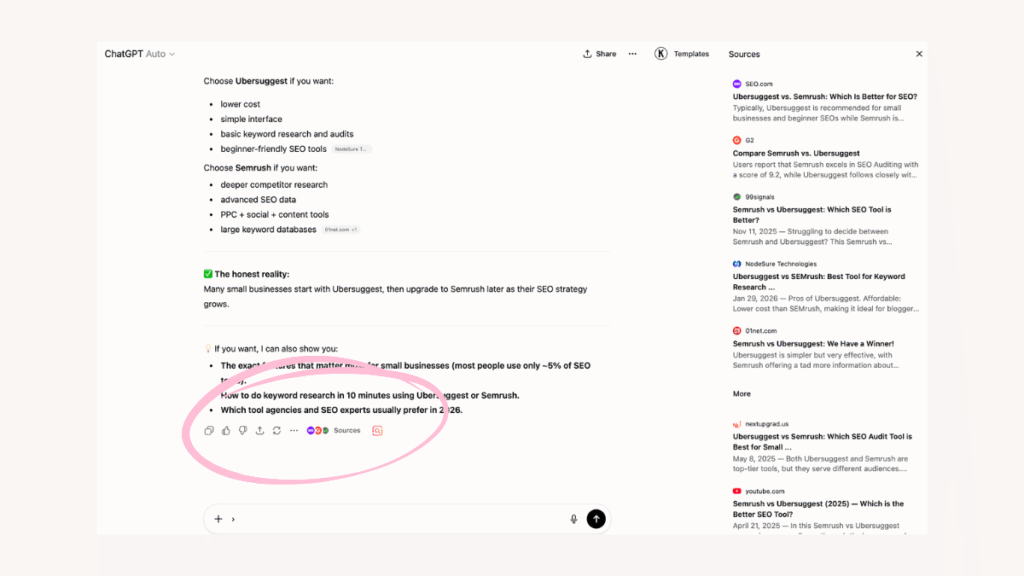
Think of it like this…
- Old search: Google shows 10 blue links
- New search (or AI search): AI summarizes the answer and says: “According to (insert your brand name)…”
So let’s start by talking about how this works, because AI mentions and sources aren’t random.
So, Why Do Some Websites Get Cited (And Others Don’t)?
With AI being so new, it’s still somewhat of a mystery how it chooses to pull certain sources and not others. But there are some strategies that have been working well for our clients and for us, which we can share.
- Clear, structured answers: Headings, bullet points, step-by-step sections, and definitions.
- Authority signals: AI models tend to favor websites that already show authority. (strong SEO rankings, backlinks, brand mentions, domain history)
- Types of content: AI loves “How to” guides, FAQs, definitions, and step-by-step tutorials.
Let’s put this into action now, shall we?
6 Things That Will Increase Your Chances of Getting AI Mentions
We can’t exactly control when AI chooses to mention our brand, but we can take a few steps to increase our chances.
1) Create Question-Based Content
In other words, literally write out the questions and answers inside your content. Take this podcast for example… What did we talk about right before this?
“Why Do Some Websites Get Cited (And Others Don’t)?”
This is a question people are asking. And you better bet this will be a headline in the show notes that support this episode.
How do you find out what questions people are searching for in order to be cited?
- Google autocomplete
- “People Also Ask” on a Google Search page
- Answer the Public
- Actually asking your audience or customers what they are struggling with and what they are searching for right now.
2) Write like a teacher.
AI prefers content that explains things clearly. Write things out step-by-step (like we’re doing in this section) and clearly explain the why and how.
You know that “readability” score in Yoast? This is why it matters.
3) Structure your content so that AI can steal it.
Make it easy for AI to read and understand your content in order to mention it later on.
- Heading tags (H2, H3, etc)
- Bullet points
- Short paragraphs
- Numbered lists
4) Add Schema
Stay with us… this one gets a little technical, but it doesn’t have to.
Structured data is extra information you add to your website (on the backend, in the code) that helps search engines better understand your content.
Think of it like a label for a folder. Visitors don’t see it, but bots and crawlers do.
A schema is simply a language of structured data.
You might be wondering if we’re asking you to become a developer and learn code… and no, we definitely are not.
That’s the beauty of AI… ChatGPT can actually help you create this data, and there are tools to help you verify whether it’s correct!
Tools that validate:
*Note: Not all types of schema is a rich result. So it may not show up in Googles’ rich result test.
So what types of schema can you add to your website?
- Organizational schema (information about your business)
- Local business schema (clearly connect your Google Business Profile and your website)
- Service page or offer schema
- FAQs
This helps AI interpret your content faster.
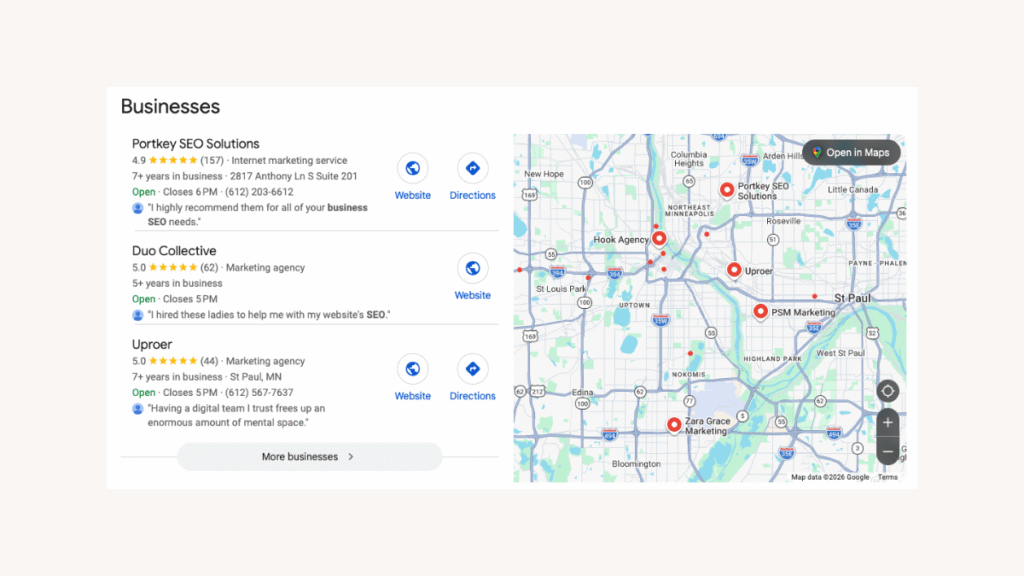
We teach a lot more about schema in SEO on Tap!
5) Show up and publish content consistently.
AI models look for trusted sources that regularly produce helpful information.
They want a library of helpful content and to know you are dedicated to keeping it up to date.
Quality over quantity. Same as it’s always been.
6) Don’t be generic… be originally you.
AI tends to favor unique insights, real examples, and content that shows experience.
If your content sounds like it could have been written by AI… It’s less likely to be cited. Kinda ironic, right?
So throughout your content, be sure to share real-life stories, case studies, personal experiences, actual data, etc.
And on that note, write for your audience. These tools work really hard to understand the owner, and they are more likely to connect you with the right people when your content specifically speaks to them.
The Biggest Mistakes People Are Making
There are some sketchy strategies you should be avoiding if you want more AI mentions.
- Ignoring that AI is even there and could be a viable SEO strategy.
- Trying to just crank out as much content as possible without even thinking through a strategy. Sorry, but AI doesn’t reward volume.
- Thinking you have to choose between AI and traditional SEO… and you really don’t.
All these tips are still effective if you were only trying to rank on Google. Good content is good content.
How This Changes SEO Strategy
Think about it this way… The goal isn’t to flood the internet with content. Stop asking the question of “how often do I need to blog” and start envisioning this as the goal…
The goal is to become the clearest, most helpful source on a topic.
Be the expert in your thing.
How to Track Your AI Visibility
Before we go our separate ways today… You know we are data nerds. So you might be asking… “How do I actually measure this?” or “Do I show up anywhere in AI citations right now?”
Use these tools to find out:
- Google Analytics: You can see this under referral traffic
- Ubersuggest: Has an entirely new AI visibility resource that not only allows you to track your AI performance, but also helps you find new opportunities.
- Bing Webmasters (the Google Search Console of Bing)… they are one step ahead, and we are loving this data!
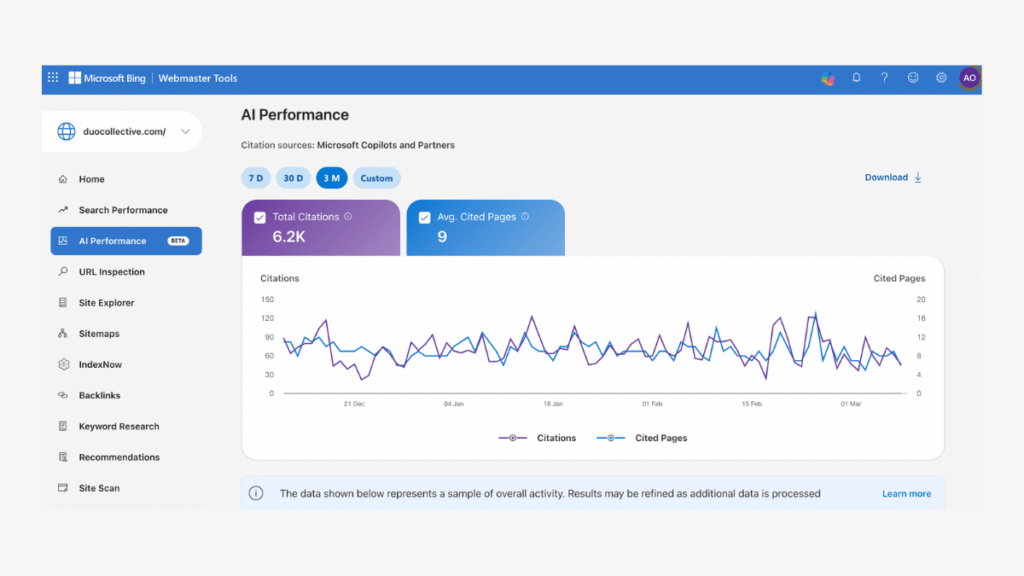
It’s Time for a Mindset Shift
Instead of asking: “Am I ranking for this keyword?”
Start asking: “Do I have the best content library on this topic I specialize in?”
For example, if you want to be cited for SEO education, you might have content on all these topics, not just one about SEO tips.
- Keyword research
- Structured data
- Blogging strategies
- SEO tools
- Internal linking
- Content strategy
The more comprehensive your coverage is, the more likely AI is to see you as a trusted source.
So what do you say? Are you ready to get your website cited?
Here’s your homework:
- Use the resources to see if you have any AI mentions already.
- Find a piece of content you love that speaks to your uniqueness and run through these 6 things we talked about to make updates to this content.
Yes… before you even think about creating new content, let’s start with the quality-over-quantity approach and fix what’s already on the inside of our business.
Now get to work!
FAQs About AI Mentions
AI mentions increase visibility in AI-powered search results and conversational tools. As more people use AI to find recommendations, being mentioned can drive brand awareness, website traffic, and potential leads.
AI tools analyze trusted sources across the internet, including authoritative websites, structured data, online reviews, and frequently cited content. Brands that appear consistently in credible sources are more likely to be mentioned.
No. Traditional SEO focuses on ranking pages in search engine results, while AI mentions focus on whether your brand or content is referenced in AI-generated answers. However, strong SEO often improves your chances of being cited by AI.
Dive Deeper Into This Topic With Us!
Apple Podcasts | Spotify
If you loved today’s episode of The Duo On Air Podcast, we’d love for you to leave a review on your favorite platform and hit subscribe for those new episodes dropping every Monday — it helps more small business owners find us (and let’s be honest, that’s good SEO 😉).
More From The Duo
Sign Up for Tuesday Confetti Drop Newsletter
Abbey Oslin and Courtney Petersen are Minnesota-based marketing experts with over 20+ years of combined experience working with big brands. They are educators and co-founders of Duo Collective; a boutique organic marketing agency specializing in SEO, branding, and custom websites for women-led small businesses and creative entrepreneurs.
Ready to grow your visibility and become unforgettable?
Learn more or work with our team here.
To inquire about being a guest on Duo On Air, please fill out this application form.




+ show Comments
- Hide Comments
add a comment